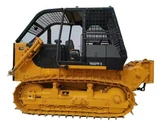
Operating a rock type bulldozer near other equipment is a common scenario in construction, mining, and various earth - moving projects. As a reliable rock type bulldozer supplier, I understand the importance of safety in such operations. In this blog, I will delve into the concept of safety distance when operating a rock type bulldozer near other equipment, exploring the factors that influence it and providing practical guidelines.
Factors Influencing the Safety Distance
1. Size and Maneuverability of the Bulldozer
Rock type bulldozers come in different sizes and configurations. Larger bulldozers generally require more space to maneuver. Their long blades and wide bodies can make it difficult to change direction quickly. For example, a large - scale rock type bulldozer with a powerful engine and a wide blade may need a greater safety distance compared to a smaller, more agile model. The turning radius of the bulldozer is a crucial factor. A bulldozer with a large turning radius will need more space around it to avoid colliding with other equipment during turns.
2. Nature of the Other Equipment
The type of equipment operating in the vicinity of the rock type bulldozer also affects the safety distance. For instance, if there are small, mobile equipment like loaders or excavators, they can move quickly and unpredictably. In such cases, a larger safety distance should be maintained to account for their rapid movements. On the other hand, stationary equipment such as crushers or conveyor belts may require a different approach. While they are not moving, they may have protrusions or operating areas that need to be protected from the bulldozer's movement.
3. Working Environment
The working environment plays a significant role in determining the safety distance. In a confined space, such as a narrow mine tunnel, the safety distance may be limited by the physical boundaries. However, this does not mean that safety can be compromised. In such environments, extra caution must be taken, and the safety distance should be carefully calculated based on the available space and the movement requirements of the bulldozer. In an open - air construction site, factors like terrain slope, visibility, and the presence of obstacles also need to be considered. A sloping terrain may cause the bulldozer to slide or require more force to control, increasing the risk of collision with nearby equipment.
4. Speed of Operation
The speed at which the rock type bulldozer is operating is another important factor. Higher speeds reduce the reaction time in case of an emergency. If the bulldozer is moving at a high speed, it will require a greater safety distance to stop safely. Operators should adjust their speed according to the working conditions and the proximity of other equipment. For example, when approaching other equipment, the bulldozer should slow down to a speed that allows for quick stops if necessary.
Calculating the Safety Distance
There is no one - size - fits - all formula for calculating the safety distance. However, a general rule of thumb is to maintain a distance that allows the bulldozer to stop safely in case of an emergency. A good starting point is to consider the stopping distance of the bulldozer. The stopping distance is influenced by the speed of the bulldozer, the condition of the brakes, and the terrain.
In addition to the stopping distance, a buffer zone should be added to account for unforeseen circumstances. This buffer zone can be determined based on the factors mentioned above, such as the size and maneuverability of the bulldozer and the nature of the other equipment.
For example, in a relatively open construction site, if the rock type bulldozer is operating at a moderate speed (around 5 - 10 miles per hour), a safety distance of at least 10 - 15 feet from other equipment may be appropriate. However, in a more complex environment, such as a mine with uneven terrain and multiple pieces of equipment, this distance may need to be increased to 20 - 30 feet or more.
Practical Guidelines for Maintaining Safety Distance
1. Pre - Operation Planning
Before starting any work, a detailed site plan should be developed. This plan should identify the location of all equipment, including the rock type bulldozer, and mark out the safety zones. Operators should be familiar with the site plan and understand the safety distances required for each area.
2. Communication
Effective communication is essential when operating a rock type bulldozer near other equipment. Operators should use hand signals, radios, or other communication devices to keep in touch with each other. For example, if an operator of another piece of equipment is planning to move into the vicinity of the bulldozer, they should notify the bulldozer operator in advance.


3. Training
Proper training for bulldozer operators is crucial. Operators should be trained on how to calculate and maintain the safety distance, as well as how to react in case of an emergency. Training programs should also cover the different factors that influence the safety distance and how to adjust it according to the working conditions.
4. Regular Inspections
Regular inspections of the bulldozer and other equipment should be carried out to ensure that they are in good working condition. Faulty brakes or other mechanical problems can increase the stopping distance and pose a greater risk of collision. By conducting regular inspections, these issues can be identified and resolved before they cause an accident.
Our Rock Type Bulldozers and Safety Features
As a rock type bulldozer supplier, we are committed to providing high - quality and safe equipment. Our bulldozers are equipped with advanced safety features such as anti - collision sensors, which can detect the presence of other equipment in the vicinity and alert the operator. These sensors can help reduce the risk of collisions and ensure that the safety distance is maintained.
We also offer a range of bulldozers suitable for different applications. For example, our 220hp Swamp Bulldozer is designed for use in swampy areas, where the terrain is soft and challenging. It has special features that enhance its stability and maneuverability, ensuring safe operation even in difficult conditions. Our 220hp Coal Bulldozer is specifically designed for coal mining operations, with features that protect it from the harsh environment and ensure efficient and safe operation. And our Coal Mine Bulldozer is built to meet the unique requirements of coal mines, including high - power engines and durable construction.
Conclusion
Maintaining a proper safety distance when operating a rock type bulldozer near other equipment is essential for the safety of the operators and the efficiency of the work. By considering the factors that influence the safety distance, following practical guidelines, and using high - quality equipment with advanced safety features, the risk of collisions can be significantly reduced.
If you are in the market for a reliable rock type bulldozer or have any questions about safety distances and bulldozer operations, please feel free to contact us for procurement and further discussions. We are here to provide you with the best solutions for your earth - moving needs.
References
- Construction Equipment Safety Manual, National Institute for Occupational Safety and Health (NIOSH).
- Mining Equipment Safety Standards, International Council on Mining and Metals (ICMM).
- Bulldozer Operation and Maintenance Guide, Equipment Manufacturers Association.