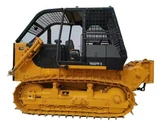
Hey there! As a supplier of Rock Type Bulldozers, I'm stoked to chat with you about the transmission system of these beasts. So, what exactly is the transmission system of a rock type bulldozer? Well, let's dive right in.
Basics of the Transmission System
The transmission system in a rock type bulldozer is like the heart and soul of the machine. It's responsible for transferring power from the engine to the tracks, allowing the bulldozer to move forward, backward, and perform all those heavy - duty tasks on rocky terrains.


There are mainly two types of transmission systems commonly used in rock type bulldozers: mechanical and hydraulic.
Mechanical Transmission
The mechanical transmission system has been around for a long time. It uses a series of gears and shafts to transfer power. Think of it as a complex set of levers and cogs working together. When the engine spins, the power is sent through the clutch, which engages and disengages the power flow. Then, it goes through the gearbox, where different gears can be selected to change the speed and torque of the bulldozer.
One of the advantages of a mechanical transmission is its simplicity and durability. There are fewer electronic components, which means less can go wrong in harsh rock - filled environments. However, it does require more skill from the operator. Shifting gears manually can be a bit of a chore, especially when you're constantly changing speeds while working on rough terrains.
Hydraulic Transmission
On the other hand, the hydraulic transmission system is a bit more high - tech. It uses hydraulic fluid to transfer power. In this system, there's a hydraulic pump that's driven by the engine. The pump pressurizes the hydraulic fluid, which then flows to hydraulic motors. These motors convert the hydraulic energy back into mechanical energy to drive the tracks.
The big plus of a hydraulic transmission is its smooth operation. You don't have to worry about shifting gears like in a mechanical system. The operator can control the speed and direction of the bulldozer just by using pedals or joysticks. It also provides better torque control, which is crucial when pushing large rocks or working on steep slopes. But, hydraulic systems can be more expensive to repair if something goes wrong, and they need regular maintenance to keep the hydraulic fluid clean and at the right level.
Components of the Transmission System
Torque Converter
A torque converter is an important part of the transmission system, especially in hydraulic transmissions. It's like a fluid coupling that allows the engine to keep running even when the bulldozer is stopped. When the engine spins, it creates a flow of hydraulic fluid in the torque converter. This fluid then transfers the power to the transmission input shaft. The torque converter also multiplies the torque, which gives the bulldozer more pulling power.
Gearbox
The gearbox is where the magic of speed and torque adjustment happens. In a mechanical transmission, it has multiple gears that can be engaged or disengaged to change the ratio between the engine speed and the track speed. In a hydraulic transmission, the gearbox might be simpler, as the hydraulic system already provides some speed and torque control. But it still plays a role in fine - tuning the power output.
Drive Shafts and Axles
Drive shafts are used to transfer power from the transmission to the axles. The axles, in turn, are connected to the tracks. They support the weight of the bulldozer and allow the tracks to rotate. The drive shafts need to be strong and durable to withstand the high forces and vibrations when the bulldozer is moving on rocky ground.
Importance of a Good Transmission System in Rock Type Bulldozers
When you're using a rock type bulldozer, the transmission system is under a lot of stress. Rocks are heavy, and pushing them around requires a lot of power. A well - designed transmission system can handle this stress and ensure that the bulldozer operates efficiently.
For example, if the transmission can't provide enough torque, the bulldozer might struggle to move large rocks or climb steep slopes. On the other hand, if the transmission is too complex and prone to breakdowns, it can lead to costly downtime. That's why we, as a Rock Type Bulldozer supplier, pay a lot of attention to the quality of the transmission systems in our machines.
Our Product Range and Their Transmission Systems
We offer a variety of rock type bulldozers, each with its own unique transmission system. For instance, our Desert Type Bulldozer is designed to work in tough desert and rocky conditions. It comes with a state - of - the - art hydraulic transmission system that provides smooth operation and excellent torque control. This allows the bulldozer to move easily through sand and over rocks without getting stuck.
Another popular model is the Td13ts - 5 Bulldozer. It features a reliable mechanical transmission system. This system is great for operators who prefer a more hands - on approach and want a simple, durable solution. The Td13ts - 5 can handle heavy - duty rock - pushing tasks with ease.
And then there's our High Displacement Static Hydraulic Bulldozer. As the name suggests, it has a high - performance hydraulic transmission system. This bulldozer is built for the most challenging rock - filled construction sites. It can deliver high torque at low speeds, making it perfect for precision work and moving large boulders.
Maintenance of the Transmission System
Proper maintenance of the transmission system is crucial to ensure the long - term performance of your rock type bulldozer. For mechanical transmissions, regular oil changes are a must. The gear oil needs to be clean and at the right level to lubricate the gears and prevent wear and tear. You also need to check the clutch regularly and adjust it if necessary.
In hydraulic transmissions, the hydraulic fluid needs to be changed at the recommended intervals. You should also check for any leaks in the hydraulic lines and hoses. A small leak can lead to a loss of pressure and affect the performance of the transmission.
Conclusion
Well, there you have it, a rundown of the transmission system of a rock type bulldozer. Whether you're a construction company looking to add a new bulldozer to your fleet or an individual contractor in need of a reliable machine, understanding the transmission system is key.
Our rock type bulldozers are designed with the best transmission systems in mind, so you can be sure that you're getting a high - quality, efficient, and durable machine. If you're interested in learning more about our products or want to discuss a potential purchase, don't hesitate to reach out. We're here to help you find the perfect bulldozer for your needs.
References
- Construction Equipment Handbook
- Principles of Heavy - Duty Machinery Design